| Scope |
To The purpose of this test is to ensure the packaged
product will survive compressive loading and maintain load
integrity during worldwide warehousing and distribution.
|
| Reference |
ASTM-D642, ASTM D4332 |
| Test Procedure |
-
Calculate the compression load required: using the
formula below,
-
Compression Load (Kg) = [192e-9 x (2744 – H) x L x W x
F] Where: 192e-9 = Average density of freight in
pounds per cubic inch (12 lbs. per cubic foot) 2744 =
Maximum height (mm) of package stack in transit H =
Height of shipping unit (mm) L = Length of shipping
unit (mm) W = Width of shipping unit (mm) F= Safety
Factor to account for humidity, time and stacking
pattern. Typical value is 5 if humidity is not taken
into consideration.
-
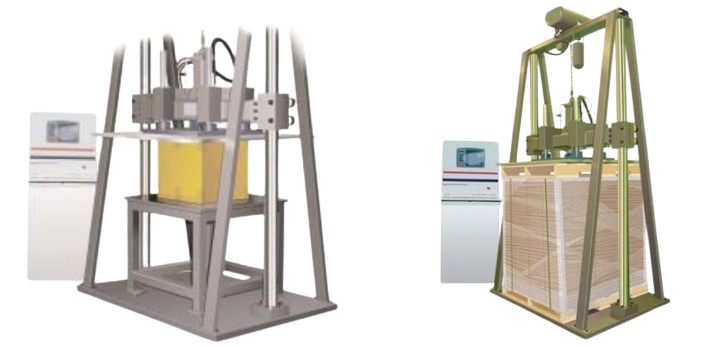
Place the test specimen in its normal shipping
orientation in tester.
-
Set up the compression tester to run at a rate of 0.5
inches (13 mm) per minute. Center the package on the
lower platen of the compression tester. Place the
top-load pallet hazard device on top of the test
sample.
-
Run test per ASTM D642 until the calculated target
compression load is met or the test package fails.
- Record maximum compression load obtained.
-
Perform pass/fail assessment and prepare report based
upon calculated and recorded results.
|
| Evaluation |
There should not be any damage on packaging till the
compression load is reached.
|
|
Level of Acceptance / Success Criteria
|
There should not be any damage on packaging.
All test specimens should pass the test.
|
 Wissen BaumEngineering Solutions